Dentures or Implants: How to Make the Right Choice
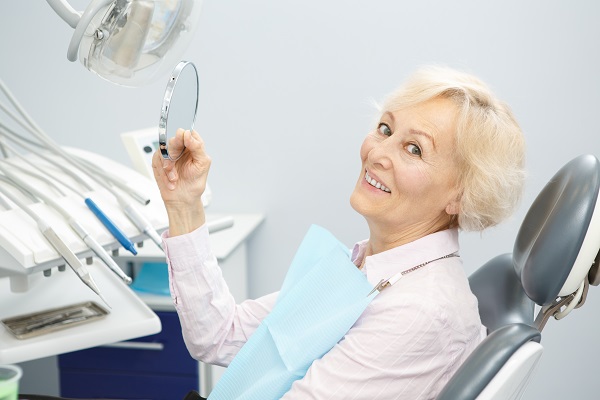
To replace broken or decayed teeth, dentures have been a popular choice among adults for decades. In some form, this apparatus has been around for centuries. Along with implants, it is a common way to restore a person’s smile and improve the mouth’s appearance. It may not be easy to decide which one is right for you, so it can be helpful to see a comparison of the two and understand the advantages and challenges of both. Your dentist also has the knowledge and training to provide you with a recommendation.
Replacing the teeth
Though teeth are stronger than bones, they can also break and experience problems. Lack of good brushing habits can lead to serious decay or infections. When fillings or root canals are not sufficient to save the tooth, the dentist may have to pull it out. Patients may also visit the dental office to repair a broken tooth. In the most significant cases, it may be more effective to extract it. Teeth can become dislodged through hard blows to the face in accidents and injuries.
Removable vs. permanent
One of the first things the person should consider is whether they want to have a removable option or something that stays in the mouth. In most situations, the person can take the mouth appliance out for cleaning and maintenance. Some patients like this, but others worry about the appliance slipping out at inopportune times. People who like the idea of removing the apparatus should choose dentures because implants are permanent. However, it can put some people at ease to know the implants are firmer and will not easily come out.
Process length
Living without teeth is inconvenient and makes the person feel embarrassed. A patient who is eager for a faster solution will find that getting dentures happens more quickly. It can take a few weeks to make the apparatus after the dentist sends impressions to a lab. However, implants require a longer wait — sometimes up to several months. It is a surgical process where the patient’s gums and jaw must heal after initial implantation before the dentist attaches the false teeth.
How many to replace
Implants are a good choice whether the patient has one, multiple or numerous missing teeth. The alternative comes in either partial or full varieties. For a small number of missing teeth, many patients find that implants make the most sense because the cost of replacing all teeth this way could be a big financial commitment. On the other hand, the other choice offers some convenience for a full-mouth solution.
Talk to your dentist about dentures and implants
When you are having oral health problems, consider the benefits of these two treatments. You may still have difficulty knowing which way to turn. Your dentist can provide helpful insight into choosing a tooth-replacement option that feels right. Chat with your dentist today about your needs and goals so you can move forward with the appearance and health you want. Make an appointment and start on the road to looking and feeling good.
Request an appointment here: https://www.dentistofvisalia.com or call Visalia Care Dental at (559) 975-1213 for an appointment in our Visalia office.
Check out what others are saying about our services on Yelp: Read our Yelp reviews.
Related Posts
A dental inlay is one of several restorative options available to repair damaged teeth and preserve oral health. When decay, fractures, or wear compromise the strength or structure of a tooth, dentists consider the severity and location of the damage to determine the most appropriate treatment. Understanding the differences between a dental inlay, onlay, filling,…
Preventative dental care refers to all the ways you can maintain the health of your teeth and gums, which will ultimately help prevent more severe issues down the road. One great way to provide this type of care is through treatments, including scaling and root planing, periodontal therapy, and laser gum surgery. The following are…
Preventative dental care has long been the focus of dentists and patients alike. Taking proactive steps to protect your teeth and gums not only helps you prevent tooth decay and gum disease but can also decrease your risk of developing other illnesses such as heart disease, stroke, cancer, and diabetes. Here’s how oral health affects…
The most effective way to prevent tooth decay is with preventative dental care. Everyone wants to maintain a healthy white smile for a lifetime. Your smile is your first impression and a great way to show confidence. Keeping that smile can be very easy if you follow a few easy steps.Tooth decay causes gum disease,…