Invisalign vs. Braces: Exploring Your Options
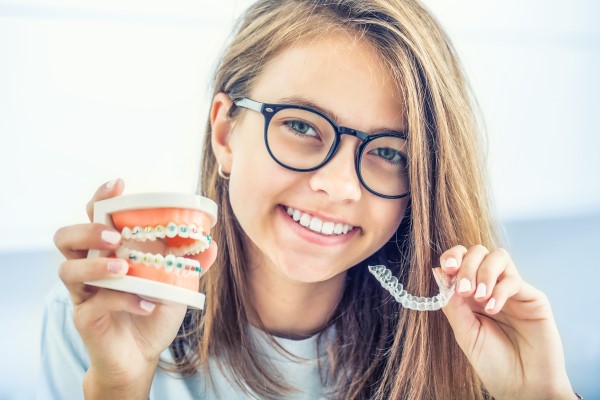
Dentists frequently recommend either Invisalign® clear aligners or traditional metal braces for patients who experience issues with teeth such as the following:
- Gapping
- Crowding
- Misalignment
- Protrusion
What is the difference?
There are pluses and minuses to both options. These are some common considerations:
Discretion
Braces consist of metal brackets that are glued to the teeth's surface to support wires held in place with rubber bands. They are highly visible, which patients may find unappealing, though contemporary versions can use this visibility to create fashions statements with colorful wires and rubber bands. Invisible aligners consist of clear trays that fit over the teeth and are barely noticeable when smiling or speaking.
Comfort
Strong glue keeps metal braces adhered to teeth at all times. The metal can rub against the interior of the mouth, causing abrasions or nicks. Clear aligner trays have smooth surfaces that do not irritate the mouth.
Hygiene
Proper cleaning of teeth is critical for preventing cavities and gum disease. Traditional braces can be difficult to navigate when flossing or brushing the gum line. The removable trays of Invisalign® facilitate brushing and flossing and do not interfere with patients' ability to clean all parts of the mouth.
Convenience
Traditional braces can require restrictions on diet and activities. It is necessary to avoid chewing gum or hard foods. Playing sports and musical instruments can lead to accidental damage to the metal and a complicated repair process. The trays of clear aligners can be removed for up to two hours daily without interfering with the efficacy of treatment, allowing for eating and other activities.
Office visits
Wearing traditional braces necessitates dental office visits every six to eight weeks for tightening, observation, replacement of bands and wires, and general cleaning. Patients who opt for clear aligners should visit their doctor for short visits about every four to six weeks to check the status and replace trays.
Who are the recommended candidates for each treatment?
Age may be a factor when choosing between alignment treatments.
Children
Traditional braces that are durable and stay in the mouth, without risk of misplacement, are usually preferred for children. Continuous treatment from metal braces can also effectively influence the proper growth of jaws and bones of children who are still growing.
Teens
Teens who prefer a subtler statement than traditional braces offer may opt for clear aligner trays but must take great care not to lose them, despite their fluid schedules. Parents must provide oversight to ensure that removable trays are worn the recommended 22 out of every 24 hours.
Adults
Both traditional braces and clear aligners work well for adults. Cost is often a factor when choosing traditional braces, but flexibility is equally important for adults who opt for removable trays. Adults usually possess the necessary discipline to care for, clean, and keep track of their aligners.
Conclusion
Traditional metal braces and Invisalign® clear aligners are popular corrective options for teeth. Dental providers often offer both options and can help patients choose a suitable treatment.
Request an appointment here: https://www.dentistofvisalia.com or call Visalia Care Dental at (559) 975-1213 for an appointment in our Visalia office.
Check out what others are saying about our services on Yelp: Read our Yelp reviews.
Related Posts
Dental laminates are a minimally invasive and effective way to correct imperfections while keeping the natural teeth strong. However, choosing to improve a smile is a big decision for many. Most patients want a better look without losing their healthy, natural tooth structure. The good news is that this modern dental service makes it possible…
A smile makeover is a personalized cosmetic upgrade that combines clinical accuracy with the artistic vision of a cosmetic dentist. The dental professional will tailor the process to each person's individual needs, preferences, and oral health, whether they are dealing with discolored teeth, worn enamel, or misaligned teeth. For patients seeking to enhance their appearance,…
A dental onlay is a conservative dental restoration designed to repair damage or decay in the tooth while preserving the maximum amount of natural structure. Unlike crowns, which cover the entire tooth, a dental onlay fits snugly over the affected area, restoring function and appearance. This approach offers significant benefits for patients looking to maintain…
Your cosmetic dentist can transform your smile with the right treatments. An extensive assessment will determine the necessary procedures. Your general dentist may refer you to this dental care provider. A smile makeover can elevate your look. Below are the treatments that your cosmetic dentist may offer.The cosmetic dentist may recommend this procedure for a…